
Streamlining Background Verification for Employers with Pluto
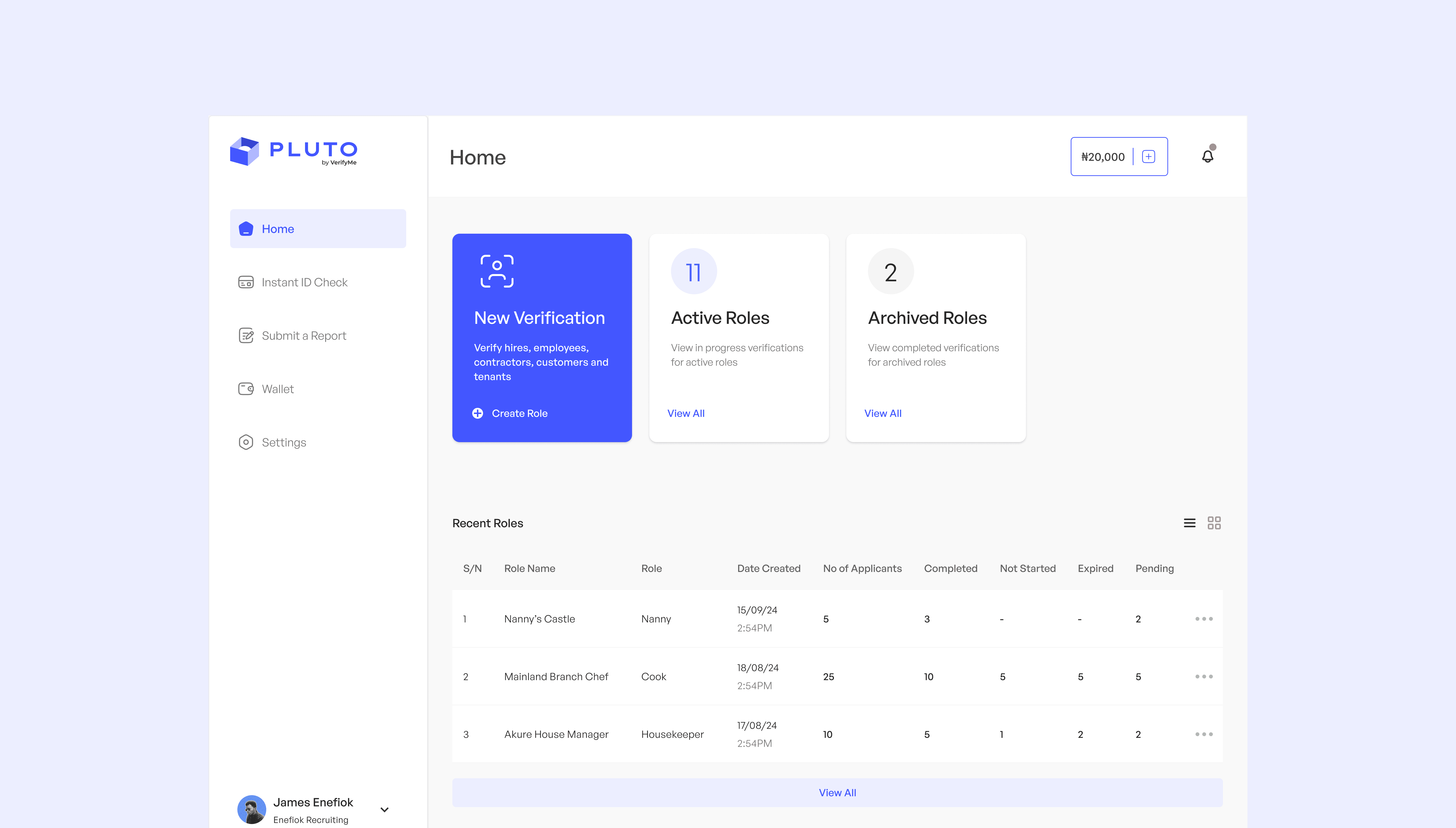
Pluto is a background verification app from VerifyMe Nigeria that helps businesses, hiring managers and landlords streamline the process of verifying their candidates. As lead designer, I was responsible for the ux process behind the creation of Pluto and this case study highlights my approach to understanding the users, defining problems, and designing a solution that provides a seamless verification experience for users.
My Role
My Role
Lead Designer
Year
Year
2023
Industry
Industry
HR
Problem Statement
Today employers face challenges in carrying out background checks on their candidates. A lot of existing solutions are either completely manual and take too long to complete, or are not well suited for employment use cases and therefore tedious for users. Some of the specific problems include:
Cumbersome verification processes
Generic verification procedure not tailored to role of candidate
Difficulty in managing multiple verifications
Lack of standardized background check procedures that sometimes result in subjective results.
Today employers face challenges in carrying out background checks on their candidates. A lot of existing solutions are either completely manual and take too long to complete, or are not well suited for employment use cases and therefore tedious for users. Some of the specific problems include:
Cumbersome verification processes
Generic verification procedure not tailored to role of candidate
Difficulty in managing multiple verifications
Lack of standardized background check procedures that sometimes result in subjective results.
User Research
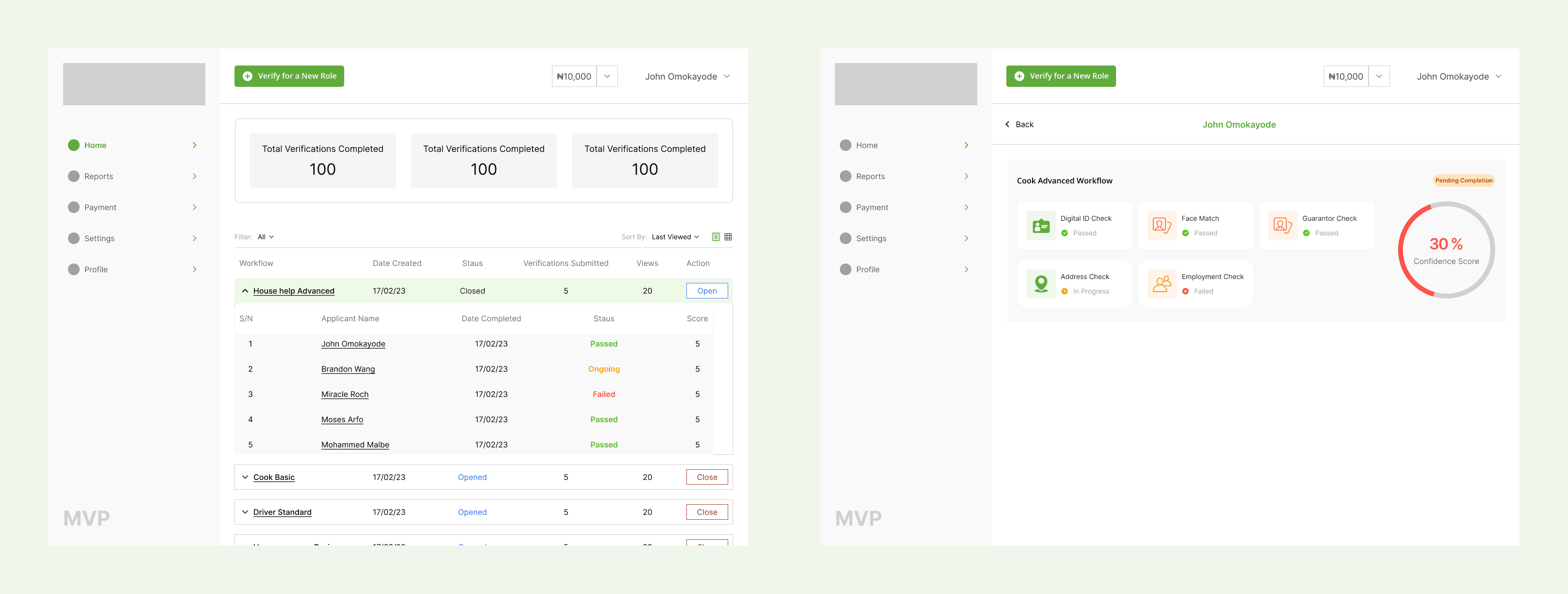
Pluto initially started out as efforts to redesign an existing VerifyMe verification platform called MVP but as I and the rest of the VerifyMe team carried out research we found that a redesign of that product will be insufficient. We needed a different approach to solving the gaps in conducting background checks and verifications for employment use cases. To validate the need for Pluto, I conducted extensive user research involving:
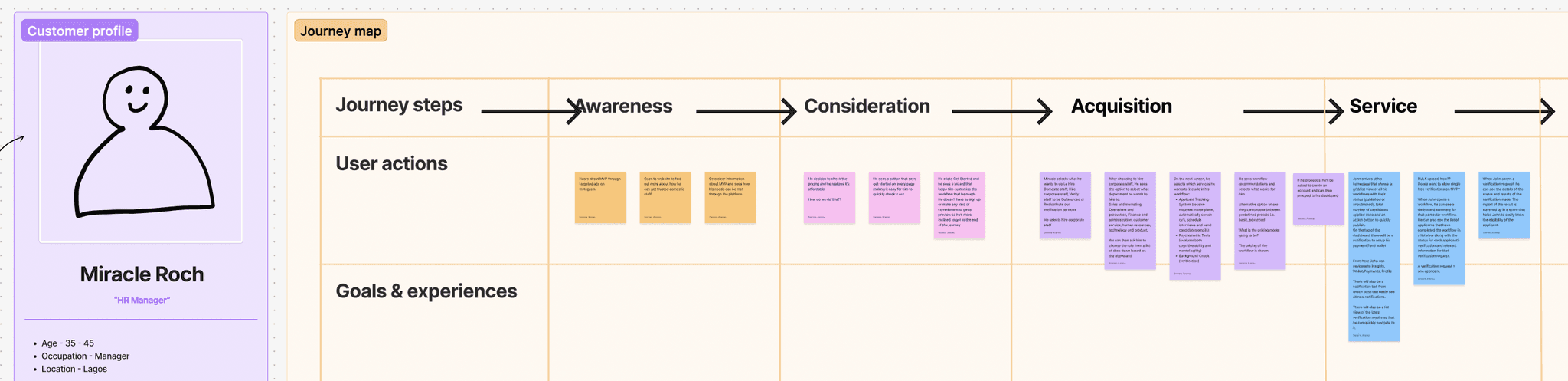
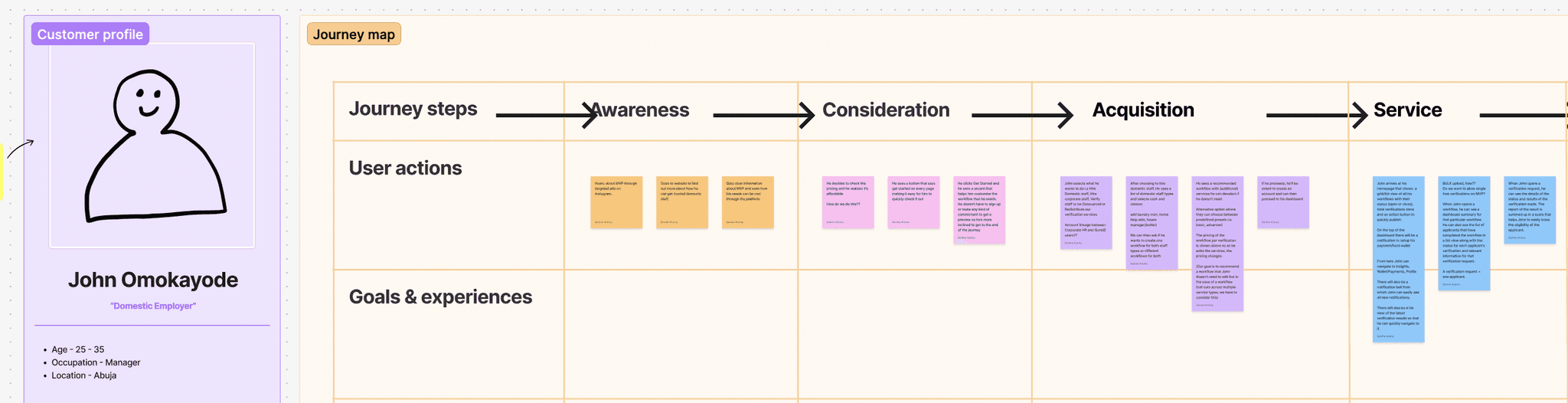
Interviews with businesses and outsourscing agencies, to understand their verification pain points.
Surveys targeting domestic employers and HR professionals to understand their needs when carrying out background checks
Competitive analysis of existing solutions to identify gaps in the market.
`Some of my key findings include:
Verification requirements differ for different job roles.
Previous employment verifications is an integral part of workflows for both domestic and corporate use cases
Candidates that don’t have access to smart devices need to be catered to which is a common occurence for domestic workers.
A lot of users don't have the infrastructure to integrate verification services into their platform. They need a place to start and manage the entire process seamlessly.
Outsourcing companies and recruiting agencie need a way to seamlessly conduct background verifications for large number of candidates.
Pluto initially started out as efforts to redesign an existing VerifyMe verification platform called MVP but as I and the rest of the VerifyMe team carried out research we found that a redesign of that product will be insufficient. We needed a different approach to solving the gaps in conducting background checks and verifications for employment use cases. To validate the need for Pluto, I conducted extensive user research involving:
Interviews with businesses and outsourscing agencies, to understand their verification pain points.
Surveys targeting domestic employers and HR professionals to understand their needs when carrying out background checks
Competitive analysis of existing solutions to identify gaps in the market.
`Some of my key findings include:
Verification requirements differ for different job roles.
Previous employment verifications is an integral part of workflows for both domestic and corporate use cases
Candidates that don’t have access to smart devices need to be catered to which is a common occurence for domestic workers.
A lot of users don't have the infrastructure to integrate verification services into their platform. They need a place to start and manage the entire process seamlessly.
Outsourcing companies and recruiting agencie need a way to seamlessly conduct background verifications for large number of candidates.
Defining the Solution
Based on these research insights, we set out to design Pluto as an intuitive, role-based verification platform that:
Simplifies background checks by allowing users to verify multiple candidates in one place.
Offers standardized verification flows tailored to different job roles (i.e. verification for a nanny should be different from verification for an accountant).
Provides both remote and in-person verification modes for conducting verifications
Provides detailed, exportable reports to improve hiring decisions.
Based on these research insights, we set out to design Pluto as an intuitive, role-based verification platform that:
Simplifies background checks by allowing users to verify multiple candidates in one place.
Offers standardized verification flows tailored to different job roles (i.e. verification for a nanny should be different from verification for an accountant).
Provides both remote and in-person verification modes for conducting verifications
Provides detailed, exportable reports to improve hiring decisions.
Design Process
1. Information Architecture & User Flow
To ensure a seamless user experience, we structured Pluto’s information architecture with:
Verification request flows where users can choose the role for which they want to verify candidates before going ahead to submit candidate's details.
Role dashboards for tracking the status and results of candidate verifications within each role.
Verification scores for each candidate to sum up the performance of candidate
Detailed reports to provide insights and more information about verifications done on each candidate.
A global dashboard for easily accessing roles created for verification.
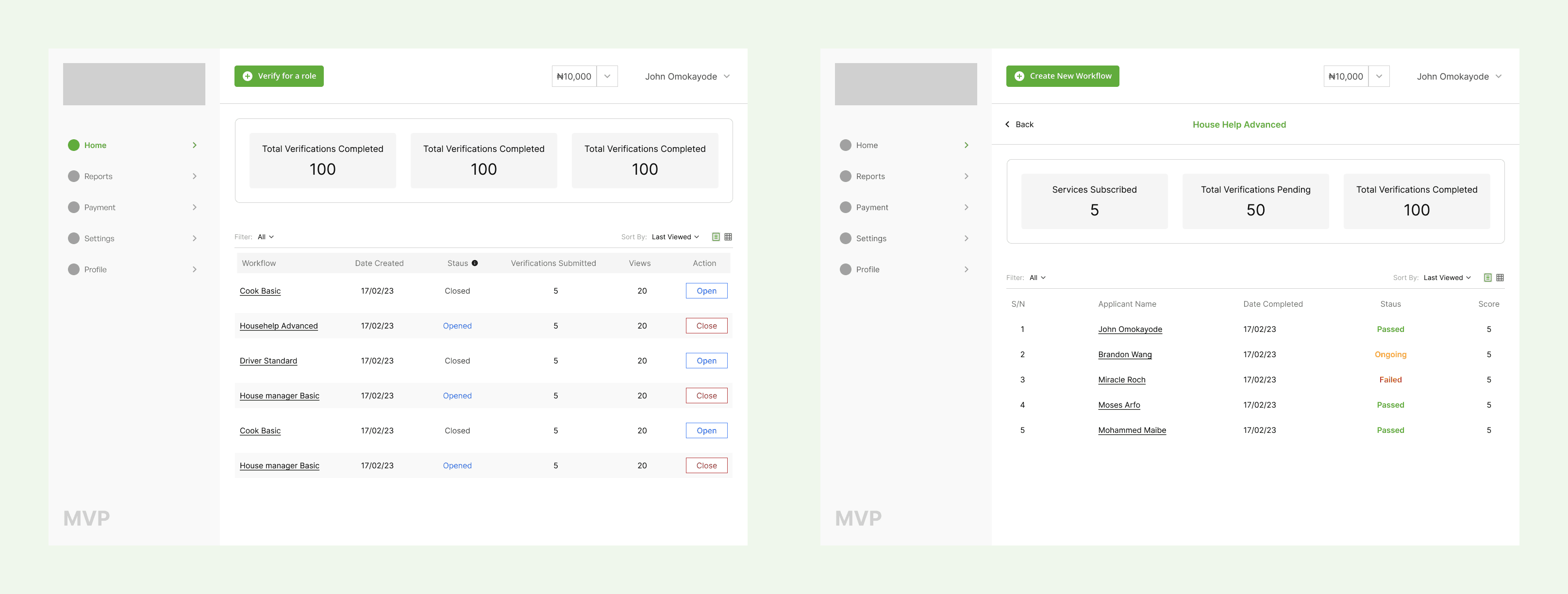
2. Wireframing & Prototyping
I created low-fidelity wireframes to visualize key user interactions. After testing with potential users, the designs evolved into high-fidelity prototypes, incorporating:
A clean, intuitive interface with clear action points.
Role-specific workflows that adjust verification steps based on role to be verified for.
Progress indicators to guide users through the verification process.
3. Usability Testing & Iteration
With a clickable prototype, I conducted usability tests:
Users were asked to complete tasks like verifying a candidate, checking the status of verification and viewing a report.
Feedback from testing revealed issues that lead to a redesign for clearer steps and a more intuitive UI.
1. Information Architecture & User Flow
To ensure a seamless user experience, we structured Pluto’s information architecture with:
Verification request flows where users can choose the role for which they want to verify candidates before going ahead to submit candidate's details.
Role dashboards for tracking the status and results of candidate verifications within each role.
Verification scores for each candidate to sum up the performance of candidate
Detailed reports to provide insights and more information about verifications done on each candidate.
A global dashboard for easily accessing roles created for verification.
2. Wireframing & Prototyping
I created low-fidelity wireframes to visualize key user interactions. After testing with potential users, the designs evolved into high-fidelity prototypes, incorporating:
A clean, intuitive interface with clear action points.
Role-specific workflows that adjust verification steps based on role to be verified for.
Progress indicators to guide users through the verification process.
3. Usability Testing & Iteration
With a clickable prototype, I conducted usability tests:
Users were asked to complete tasks like verifying a candidate, checking the status of verification and viewing a report.
Feedback from testing revealed issues that lead to a redesign for clearer steps and a more intuitive UI.
Solution and Key Features
The final design incorporated several key improvements:
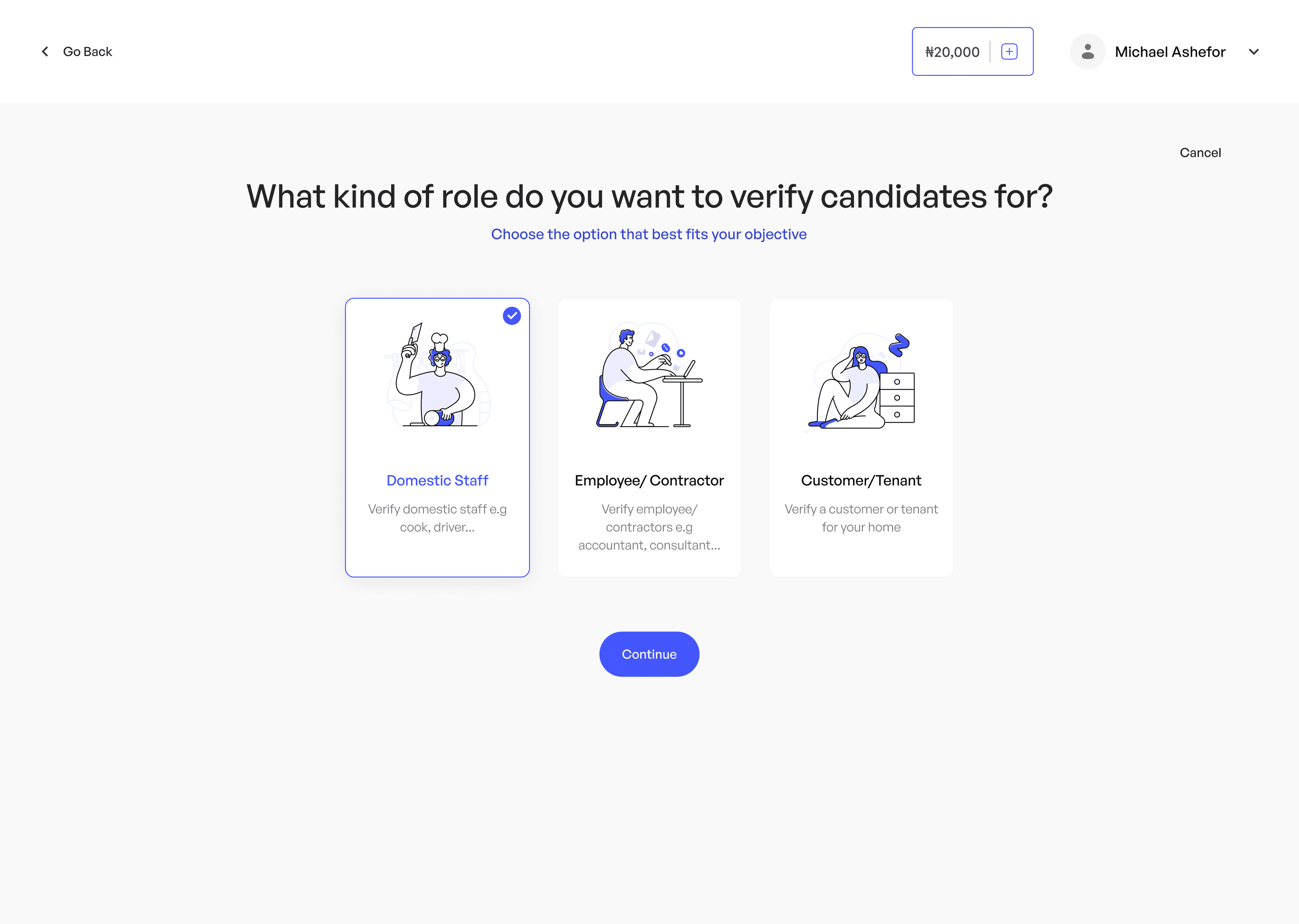
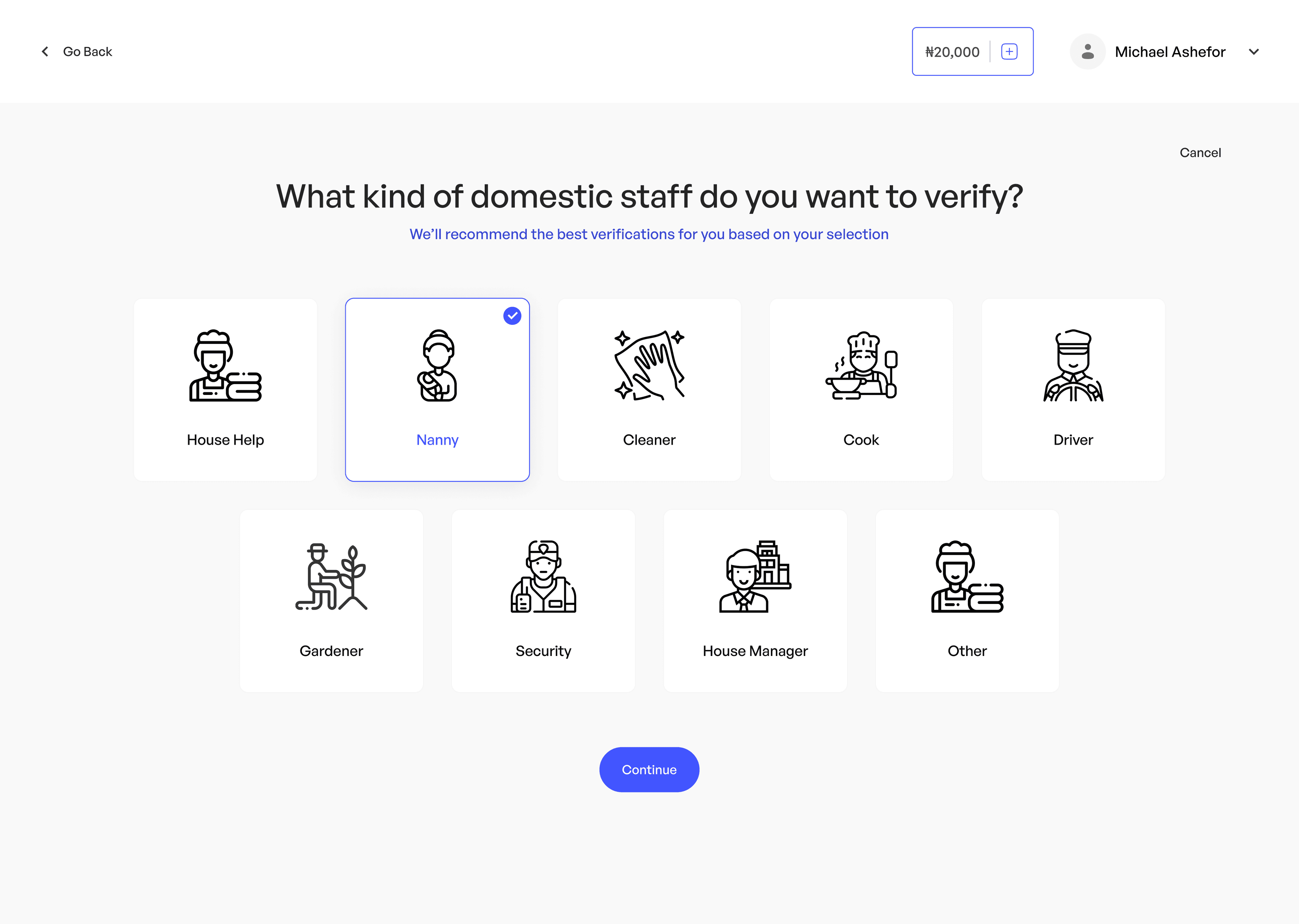
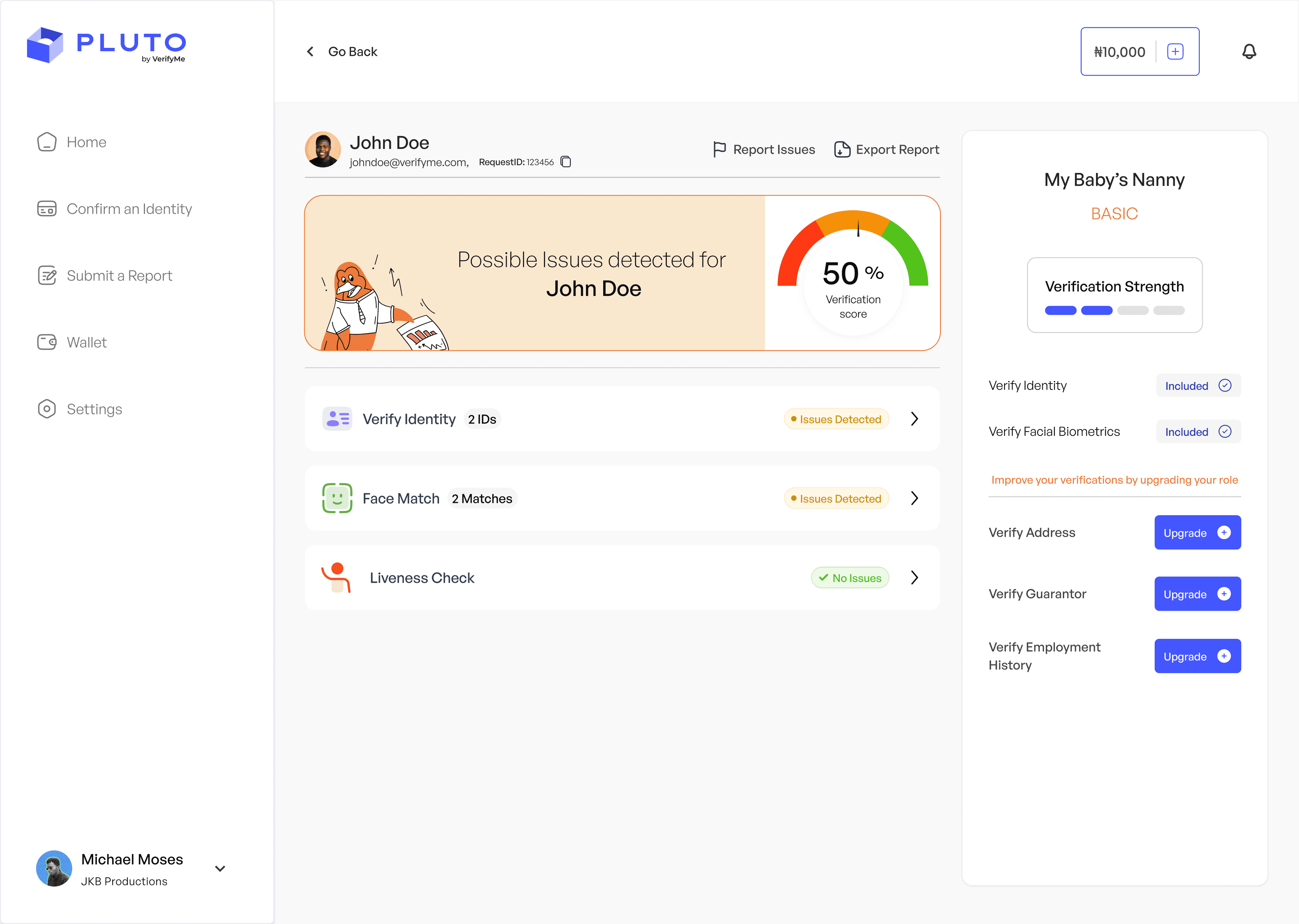
Role-based Flows: Based on the user’s role (e.g., HR manager or landlord), the app customizes the steps to suit the specific needs of the verification process.
The final design incorporated several key improvements:
Role-based Flows: Based on the user’s role (e.g., HR manager or landlord), the app customizes the steps to suit the specific needs of the verification process.
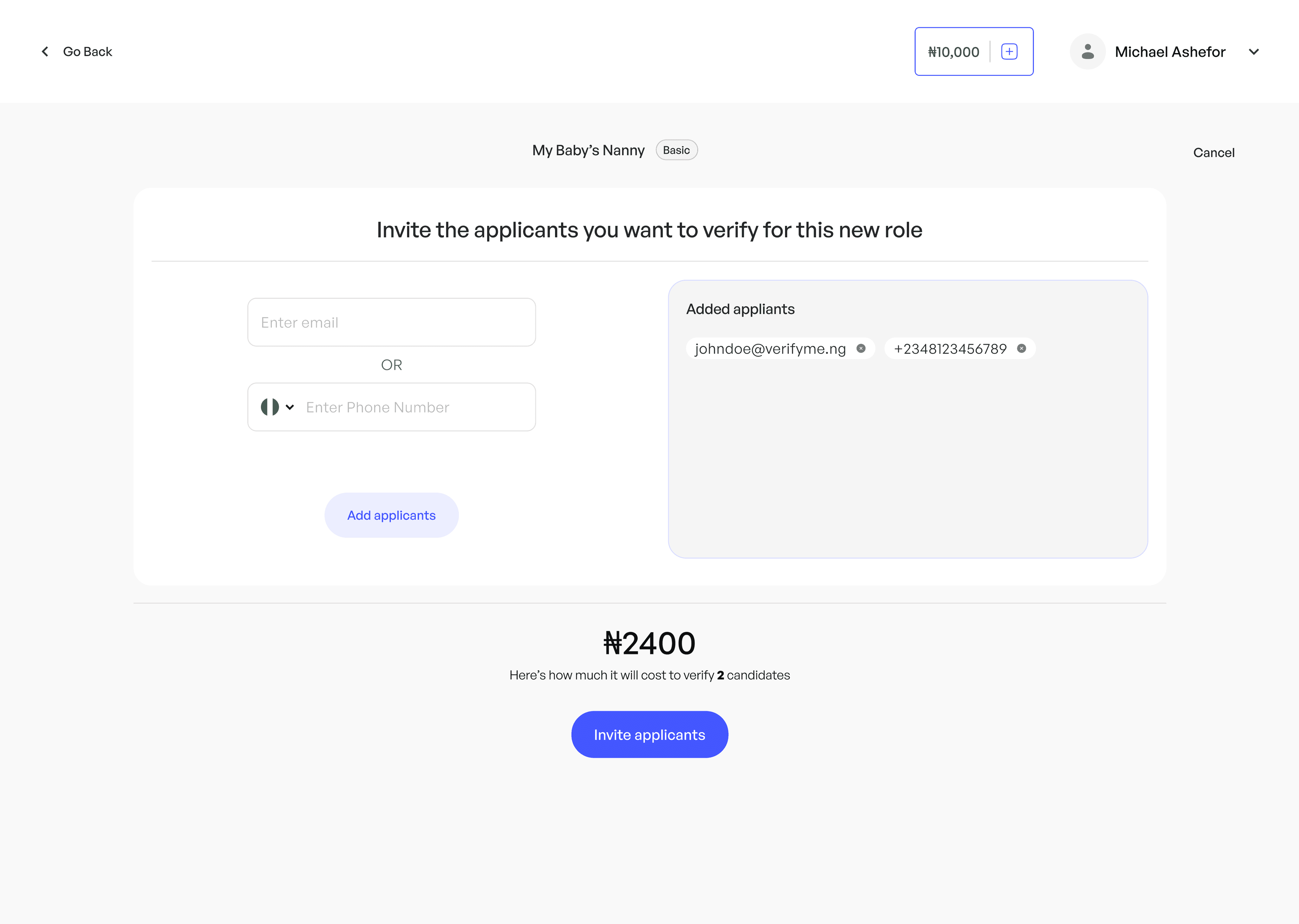
Multi-candidate Verification: Users can now easily manage multiple verifications in one place, with a clear overview of each applicant’s verification status.
Multi-candidate Verification: Users can now easily manage multiple verifications in one place, with a clear overview of each applicant’s verification status.
Applicant Verification Scores: Scores were used to qualify the performance of a candidate relative to checks done after verification was complete that aided easy comparison with other candidates.
Applicant Verification Scores: Scores were used to qualify the performance of a candidate relative to checks done after verification was complete that aided easy comparison with other candidates.
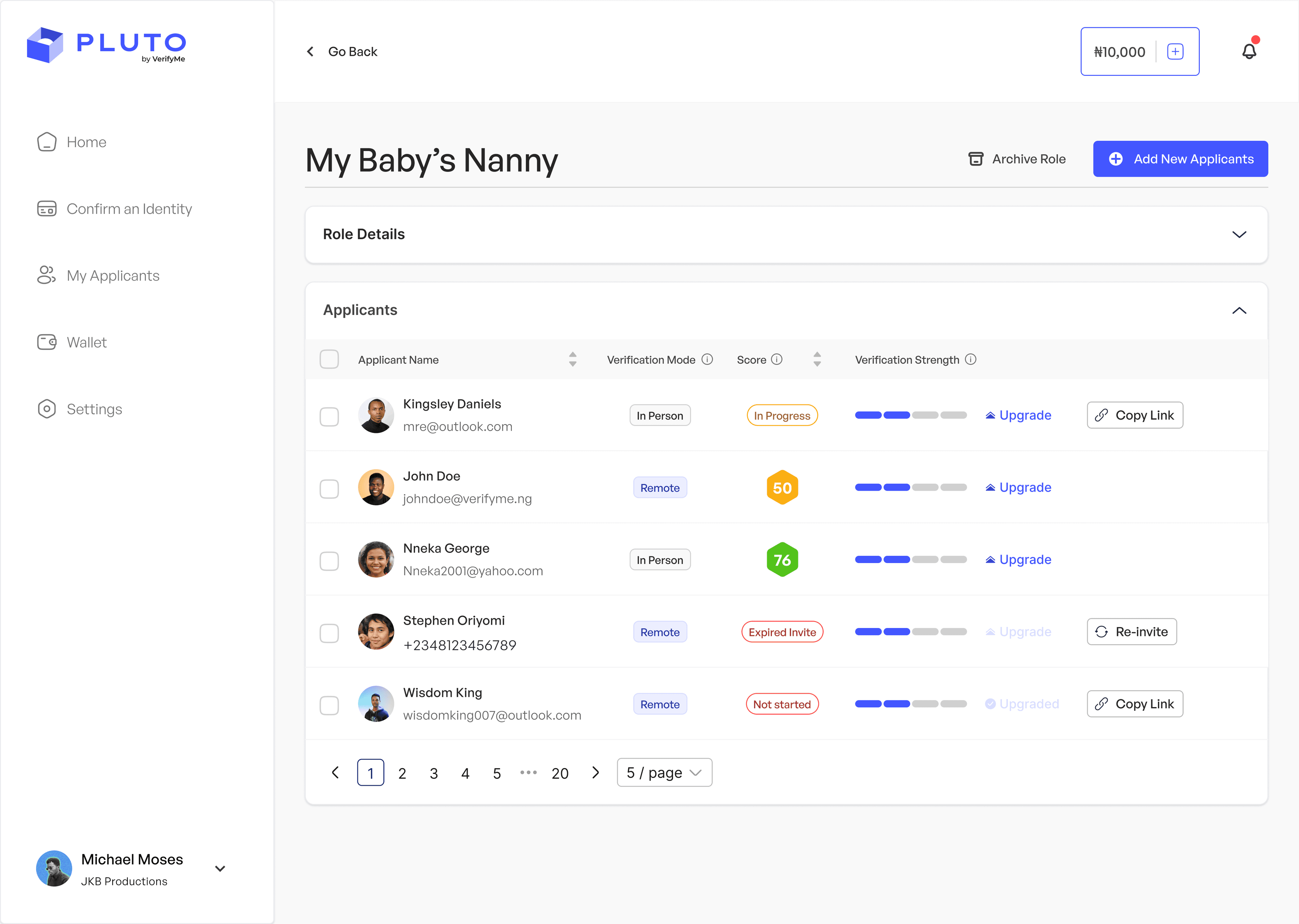
Exportable Reports: Verifications and background checks can be exported improving ease of sharing and record-keeping.
Exportable Reports: Verifications and background checks can be exported improving ease of sharing and record-keeping.
The final design incorporated several key improvements:
Role-based Flows: Based on the user’s role (e.g., HR manager or landlord), the app customizes the steps to suit the specific needs of the verification process.
Multi-candidate Verification: Users can now easily manage multiple verifications in one place, with a clear overview of each applicant’s verification status.
Applicant Verification Scores: Scores were used to qualify the performance of a candidate relative to checks done after verification was complete that aided easy comparison with other candidates.
Exportable Reports: Verifications and background checks can be exported improving ease of sharing and record-keeping.
Impact & Results
Some key impacts measured a year after launch include:
92%
Customer Effort Score
56.2%
Verification completion rate
40.5%
Revenue growth rate
Challenges & Learnings
Balancing customization with simplicity – We had to ensure that Pluto catered to multiple user types without overcomplicating the experience.
Encouraging adoption – Educating businesses on Pluto’s value through onboarding and in-app guidance was required to encourage adoption.
Managing data privacy concerns – We had to ensure compliance with data protection laws while maintaining accessibility to verification records.
Balancing customization with simplicity – We had to ensure that Pluto catered to multiple user types without overcomplicating the experience.
Encouraging adoption – Educating businesses on Pluto’s value through onboarding and in-app guidance was required to encourage adoption.
Managing data privacy concerns – We had to ensure compliance with data protection laws while maintaining accessibility to verification records.
Conclusion
Designing Pluto from scratch required a deep understanding of user needs and industry challenges. Through iterative research, testing, and refinement, Pluto emerged as an efficient and user-friendly background verification solution. Moving forward, continuous enhancements based on user feedback will further strengthen Pluto’s impact in the verification industry.
Designing Pluto from scratch required a deep understanding of user needs and industry challenges. Through iterative research, testing, and refinement, Pluto emerged as an efficient and user-friendly background verification solution. Moving forward, continuous enhancements based on user feedback will further strengthen Pluto’s impact in the verification industry.